
Can you believe we’ve already reached the letter “E” in our P.R.I.M.E.D acronym? To recap, here’s what we covered for the letter M:
Motivation: Prime driver father Mongrick Shepherd discussed how his children motivate him, and his children’s book “When Dad is Home.”
Mothers: Prime mom Heidi Eck provided her perspective as a mother, both as a co-driver to her husband, Anthony, and as a working mom at homebase.
“Me” time: Prime driver dad Michael Johnson explains why self-care is far from selfish
And that’s a wrap for the letter “M”! This week, we’ll be diving into our first “E” value: empathy. How are empathy and collaboration related? Why is empathy a virtue in the role of over-the-road dads? Why is emotional expression important?
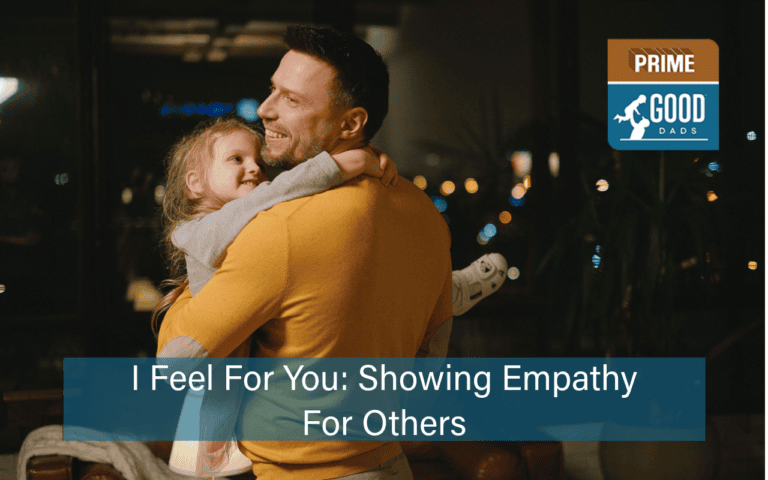
For Prime driver and father of two Chris Suitor, empathy is “to understand what someone is going through, not because you went through it, but you know whatever the situation is and why they’re feeling that way.”
Empathy is an important value for both drivers and fathers. Don’t miss our conversation with Chris on the subject!
Provide a listening ear
Before becoming a Prime driver, Chris spent 11 years working in corrections—a job that required a lot of empathy. Even though he couldn’t understand what inmates were going through completely, he was able to provide support through listening. Now he’s channeling those skills from his corrections background in other areas of his life, too.
“Let the person know you feel for them,” he explained.
Chris says that when it comes to family, it’s hard not to feel more empathy for them. His daughter recently graduated from college and moved out of the house. She bought a car, hoping it would last through school, but the motor became damaged and needed to be fixed.
“Seeing her sad and upset about it made me feel sad and upset, too,” he said.
Through empathy, Chris said he helped his daughter any way he could; emotionally by lending an ear, doing research, and funding to have the car towed.
Chris added that listening to your kids is one of the most important things a father can do. While you have to put your foot down at times, especially when something is jeopardizing the health and safety of your children, you should also listen to your children and let them voice their opinions.
For example, a lot of parents jump right to saying “because I told you so,” for reasoning with their child. Sometimes, allowing your child to voice their opinion in a clear and polite way allows you to see things from a new perspective as a parent. For Chris, he’s there to provide an ear for his kids, even as adults.
“If they need a phone call or anything, I always make myself available to my kids no matter what,” he said.

Put yourself in another person’s shoes
Having empathy for others can help with teamwork and collaboration. Even if you haven’t experienced what someone else is going through, or if you go about solving problems in different ways, putting yourself in another person’s shoes can help you see why someone might make the decisions they do.
“Everybody doesn’t experience things the same way you do,” Chris explained. “Everyone has their own process in life. To understand that, it would be very helpful to have empathy.”
Understanding why someone thinks the way they do helps us get along with others. If we’re set in our ways through different tasks, it prevents us from improving or even potentially finding a better way to solve a problem.
“You might not agree, but with empathy, you can understand why they think like that,” Chris said.
Young children especially need help from their parents in developing this skill. In fact, most developmental milestone researchers understand that the “theory of mind” – that is, the cognitive ability to understand that other people have thoughts, beliefs, desires and emotions different from your own – doesn’t form until around ages 3–5. When we put ourselves in someone else’s shoes, we’re also helping our children learn to do the same.
Don’t be afraid to show your emotions
There’s an unfortunate stigma that men aren’t allowed to talk about or express their emotions. This couldn’t be further from the truth!
Chris says that in order for men to combat this stigma, they have to start with their own children.
“Older generations thought it was weak for men to cry and share feelings,” he said. “I always made it clear to my son growing up to express his feelings and that crying doesn’t make you any less of a man.”
Expressing and showing emotions allows us to be more empathetic people. Dads can model positive expressions to their children, breaking the cycle of perceived weakness.

Final Words
Over-the-road fathers can show empathy through big or small gestures. Like many of our previous interviewees have said, family is an important thing to prioritize, especially when it comes to showing them you care.
“When it comes to my kids and family, they know I might not be there to go through it with them, but I’ll do my best to help them,” Chris said. “I understand what they’re going through.